
WHAT IS PRP?
The term PRP originated in the 1970’s by haematologists (doctors specialising in blood) who initially identified the complex nature of the platelet and its potential uses in treating different pathologies. PRP is short for Platelet Rich Plasma. Plasma is the liquid in the bloodstream in which platelets, red blood cells, and white cells are carried. Plasma constitutes more than half of the blood’s volume and consists mostly of water and dissolved salts and a protein called albumin.
PRP is obtained by subjecting a sample of blood, taken from the arm, to a minimum of 5 minutes of centrifugation. Centrifugation is a physical process which uses centrifugal force (spinning at high speed) to separate out the different components, and this is possible as the red and white cells have a higher mass than the platelets and therefore sink to the bottom leaving the platelets and plasma layer at the top. This can then be removed and injected into the body, either around a painful tendon or joint.

PLATELETS
What is a platelet?
Platelets are very small cells that exists in the blood system.
They contain Alpha-granules, which are thought of as the storage units of platelets which contain lots of different “Growth Factors” (GFs), which are released when an injured area of the body is encountered.

What do platelets do?
Platelets are usually associated with clotting of blood and healing. Platelets are directly involved in:
- Inflammation following injury
- New blood vessel formation (angiogenesis) to the injured area,
- Stem cell migration (see section on stem cells)
- Cell proliferation
All of these mechanisms are essential to help repair injured tissues in the human body.
So, if this is the case, why do we need to isolate the platelet rich plasma and perform PRP treatment? Well, the reason for this is that some tissues of the human body – ligaments, tendons, and cartilage don’t have a rich blood supply. In the case of cartilage, there is NO blood supply. Therefore it is almost impossible for platelets to carry out their function in high enough concentrations. This is the reason that ligament and tendon injuries can take such a long time to heal and that cartilage doesn’t have the capacity to heal at all. So, by taking venous blood and through the process of centrifugation, the platelets are isolated and other unwanted components of whole blood, such a red and white blood cells are excluded, leaving the precious platelets in a concentrated form, which is then injected into the affected area.
This means a much higher concentration than normal (supra-physiological) of platelets are injected into the affected tissues; stimulating healing and a resolution of chronic pathological processes. This results in improved and quicker healing, better function and improved pain. Please see the sections on Sports Injuries and Osteoarthritis for more focused information.
GROWTH FACTORS

The Growth factors
There are a host of different growth factors contained within Alpha-granules. It is thought that the complex interchange amongst them is of additional benefit to the healing process, beyond simply introducing a higher concentration of platelets at areas with poor blood supply.
The growth factors carry out their functions by binding to various cell receptors, which then causes a cascade of signals, resulting in the execution of the encoded functions.
The combination of these essential growth factors and their actions results in a process of desired inflammation, which then leads to new blood vessel formation, allowing other cells to be signalled and to be involved in the repair of the tissue involved. This is done by laying down new collagen and the proliferation of new cells, leading to healing and the restoration of the integrity of the body tissue.
WHAT ARE THE BENEFITS OF PRP?
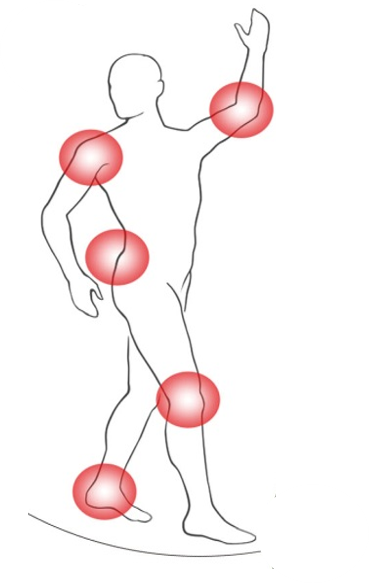
By taking advantage of the growth factors in the platelets, the body is able to heal naturally which, in turn, reduces pain and improves function. This treatment is not suitable for all musculoskeletal problems, however it has been shown to have great results when used appropriately in a variety of sports injuries, tendon conditions and in joints where pain is due to moderate osteoarthritis.

IS ALL PRP THE SAME?
NO! All PRP is not the same. As mentioned previously, the whole blood has a number of constituents including white blood cells, also known as leucocytes. PRP can be leucocyte rich or leucocyte poor (i.e. have different levels of leucocytes in it) and this depends on the particular PRP concentration system being used. Leucocyte poor is generally considered to be better, as this results in less prolonged inflammation and an improved healing environment. Further research is being carried out to test if different amounts of leucocytes, along with the platelets, may be beneficial in certain situations but this is not clear as yet.
REFERENCES

SHOULDER

HIP

ELBOW

KNEE

HAND

FOOT & ANKLE
CLINIC LOCATIONS
The PRP Clinic delivers platelet rich plasma injections at two clinical bases in Manchester and Cheshire.
You can book a consultation with us at the site most convenient for you.

Heatons Clinic
The Coach House
162 Heaton Moor Road
Stockport
Cheshire
SK4 4HS
OrthTeam Centre
Ohm Building
Didsbury Technology Park
168 Barlow Moor Road
Manchester
M20 2ZA